(Image source from: m.dailyhunt.in)
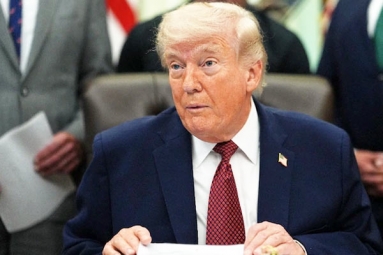
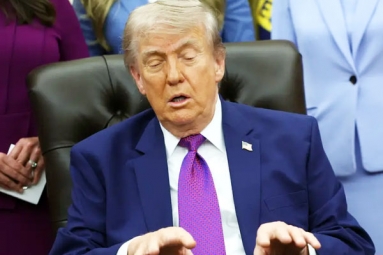
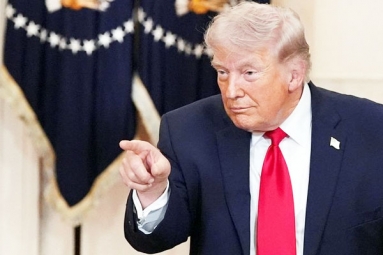
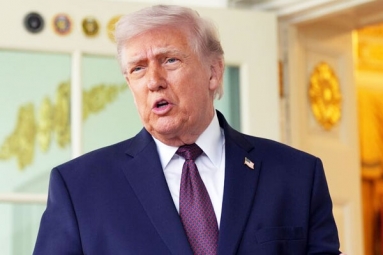
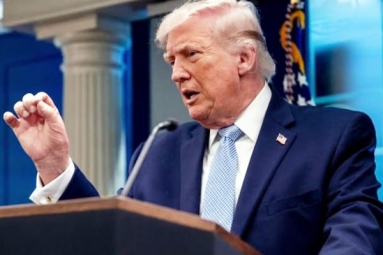
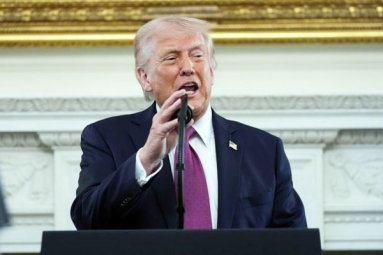
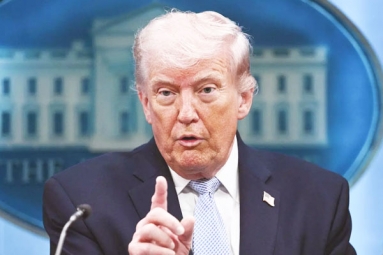
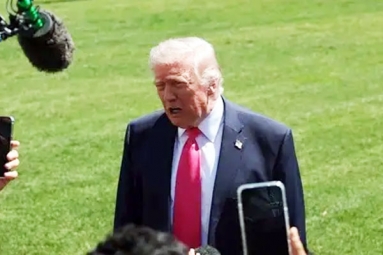
US President Donald Trump is said to be looking into a military operation in Iran to take back almost 970 pounds, or about 400 kilograms, of enriched uranium that Tehran might use to create nuclear weapons. This consideration comes even while discussions are ongoing to ease tensions in the Middle East. Reports from The Wall Street Journal, based on a source who understands Trump’s viewpoint, indicate that he has urged his advisers to get Tehran to give up the uranium as part of stopping the conflict. The report also reveals that Trump has made it clear to US political partners that Iran cannot hold on to the nuclear materials, talking about "taking it by force" if Iran refuses to yield during the negotiations. Despite this threat, Trump acknowledged that indirect conversations between the United States and Iran through Pakistani "emissaries" are showing progress. He stated that "a deal might come together pretty quickly. "
Pakistan, Egypt, and Turkey have been acting as go-betweens for the US and Iran. However, until now, there have not been any direct talks between Washington and Tehran to resolve the war.
Trump has provided various reasons for starting the war with Iran, but he consistently emphasizes that a key goal of teaming up with Israel in the military action is to make sure that Iran will "never possess a nuclear weapon. " Nonetheless, he has been more cautious about how far he is prepared to go in fulfilling his promise to eliminate Iran's weapons program entirely, including taking or destroying the nearly bomb-grade nuclear material that Iran has. Reports suggest that the Pentagon is preparing to send up to 10,000 extra ground troops to the Gulf, with the US Central Command informing last week that more than 3,500 troops, including 2,500 Marines, have already been sent to the Middle East.
On Sunday night, Trump warned of escalating the war, stating that Iran must comply with US demands or "they're not going to have a country. " Regarding Iran’s uranium, he stated, "They're going to give us the nuclear dust. "
Before the US and Israel began airstrikes on Iran in June of last year, the Islamic Republic was reported to have over 400 kilograms of uranium enriched at 60 percent and nearly 200 kilograms of uranium at 20 percent, which can be easily turned into 90 percent weapons-grade uranium. Currently, most of it is believed to be buried under the debris of a mountain facility that was hit during US bombings ordered by Trump, which he claimed had "destroyed" Tehran's nuclear program. However, International Atomic Energy Agency Director General Rafael Grossi stated that Iran's nuclear material is mainly stored at two of the three sites that the US targeted—an underground tunnel at the nuclear site in Isfahan and a storage area at Natanz. Reports indicate that Iran has centrifuges for enriching uranium and has the ability to establish a new underground enrichment site.
Based on a report from the WSJ, Trump and some of his supporters have stated that they believe it is possible to capture the materials during a focused operation without significantly prolonging the war and still allow the US to conclude the conflict by mid-April. Sources informed the publication that the US president has indicated to his team that he does not desire a "long-lasting war," as some of his senior aides wish for him to prioritize different issues, including the upcoming midterm elections, where polls indicate that Republicans might suffer considerable defeats. This undertaking is risky and complex, with many nuclear specialists arguing that it cannot be accomplished without a large number of US troops being sent into Iran, which poses a dangerous and politically delicate situation for the Republican leader, who has promised not to involve America in any prolonged and violent engagements in the Middle East. The WSJ highlighted that any attempt to forcibly take the uranium would be intricate and risky, citing former US military personnel and experts. Such an operation could provoke retaliation from Iran and potentially extend the war far beyond the 4-6 week period that Trump’s administration has publicly stated.
Additionally, experts noted that for this operation to be successful, groups of US soldiers would need to access Iranian sites, likely while facing attacks from Tehran’s surface-to-air missile systems and drones. Upon arrival, the US forces would first need to secure the area so that engineers, equipped with digging tools, could go through the rubble to remove any explosives and traps. After locating the nuclear materials, a specialized elite team would be required to extract it. According to the report, the highly enriched uranium is expected to be stored in around 40 to 50 specialized cylinders that look like scuba tanks.
The skilled personnel would have to place transport containers on these cylinders to avoid any mishaps. This operation could take up considerable space and require multiple trucks, according to Richard Nephew, a senior research scholar at Columbia University and a former nuclear negotiator with Iran. To effectively move the materials out of Iran, a functioning airfield would be necessary. If an existing one is not available, a temporary airfield would need to be constructed to bring in equipment and remove the nuclear materials. Experts stated that the entire operation might span several days or even a week to finalize.
Trump has suggested that there are varying opinions among his senior advisors regarding Iran, mentioning that his intelligence chief Tulsi Gabbard is "gentler" than he is when it comes to limiting Tehran's nuclear goals. Trump, who also indicated that a deal to manage Tehran's nuclear aims might be close, responded "yeah, sure," when a reporter questioned him about his trust in Gabbard, who is the US director of national intelligence. "Her way of thinking is a bit different from mine," Trump commented while on Air Force One coming back to Washington after a weekend at his Mar-a-Lago home in Florida. "However, that doesn't mean she isn't qualified to help. I believe strongly that I do not want Iran to obtain a nuclear weapon because if they did, they would use it right away. I think she may be somewhat more lenient on this topic, but that's perfectly fine. "
Trump rarely admits to disagreements among high-ranking officials concerning the joint US-Israeli efforts against Iran, which is now in its second month. Vice President JD Vance has taken a careful stance on the conflict, and some other leading Republicans have expressed concern in private about the economic and political impacts of the conflict at home.