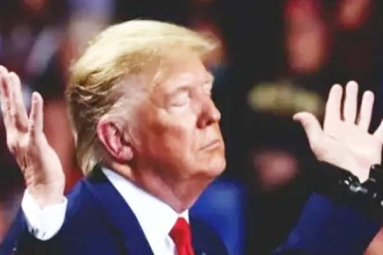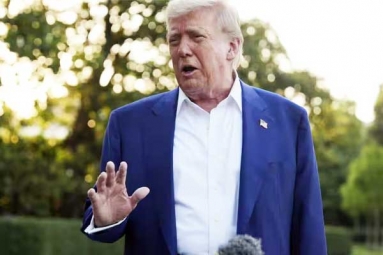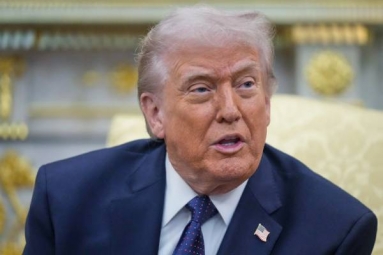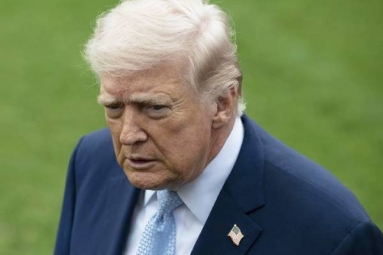
(Image source from: Thefederal.com)
On Friday, US President Donald Trump took action to remove an extra 25 percent tariff he had placed on Indian goods due to the country buying oil from Russia. This move is part of a trade agreement revealed earlier this week. Trump stated in an executive order that India has promised to stop importing oil from the Russian Federation, whether directly or indirectly. New Delhi also mentioned it will buy energy products from the US and has recently committed to a ten-year plan with the United States to increase defense collaboration. The extra 25 percent US tax will be taken off at 12:01 am Eastern Time on Saturday.
This executive order was issued shortly after Trump shared a trade agreement aimed at lowering tariffs on India, noting that Prime Minister Narendra Modi had pledged to halt Russian oil purchases due to the ongoing war in Ukraine. The agreement will also lead to the US reducing certain tariffs on Indian goods to 18 percent, a decrease from the current 25 percent.
The implementation of this decrease is yet to happen. Other aspects of the deal include lifting tariffs on specific aircraft and their parts, as mentioned in a separate statement released by the White House on Friday. The statement noted that India plans to buy $500 billion worth of US energy products, aircraft, parts, precious metals, technology items, and coking coal over the next five years. This change represents a significant reduction in US tariffs on Indian goods, decreasing from a rate of 50 percent late last year. The agreement alleviates months of strain over India's oil purchases, which the US says support a conflict it wants to resolve.
It re-establishes strong relations between Trump and PM Modi, whom the US leader has referred to as "one of my greatest friends. " The 18 percent tariff will provide Indian exporters a slight advantage in the US market compared to regional competitors who face tariffs between 19 percent and 20 percent, according to Wendy Cutler, senior vice president at the Asia Society Policy Institute, this week.