(Image source from: Dnaindia.com)
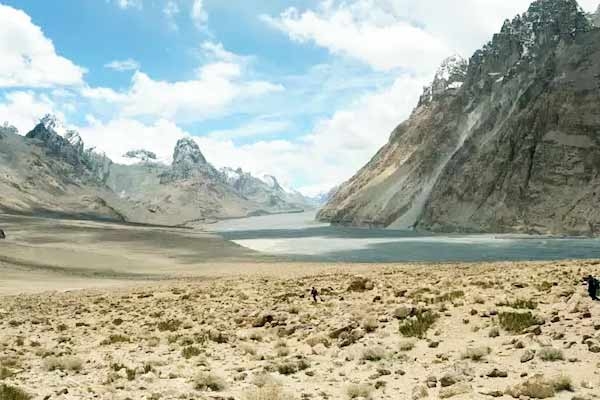
China has once again heightened tensions with India by repeating its baseless claims regarding Shaksgam Valley in Jammu and Kashmir, asserting that the infrastructure projects it is carrying out in the region are "flawless". This situation arose just days after Delhi criticized Beijing's construction work in the valley, stating it will take necessary steps to protect its interests, as it is Indian land. The Shaksgam Valley, which is in a delicate area near China's Xinjiang province, is situated at a high altitude north of the Karakoram mountains, near the disputed Siachen/Aksai Chin region. This valley is part of the Hunza-Gilgit Region in Pakistan-administered Kashmir. In 1963, Pakistan illegally handed over 5,180 square kilometers of Indian land in the Shaksgam Valley to China through the Sino-Pakistan Border Agreement, a move that New Delhi has firmly declared as illegal and illegitimate, upholding India's rightful claim to that territory.
When asked about India’s stance on Shaksgam, spokesperson for the Chinese Foreign Ministry, Mao Ning, said during a press conference in Beijing that "to start with, the area you mentioned is a part of China's territory. " She added that "China's infrastructure projects in its own territory are indisputable," while addressing India's criticism. Referring to the illegal agreement with Pakistan, Mao stated that China and Pakistan have had a border agreement since the 1960s that defines their borders. "These are the rights of Pakistan and China as independent nations," she claimed. However, despite China's assertions, Article 6 of the 1963 agreement with Pakistan clearly indicates that "the two Parties have agreed that after resolving the Kashmir dispute between Pakistan and India, the relevant sovereign authority will reopen discussions with the Government of the People’s Republic of China regarding the boundary described in Article Two of the current Agreement to establish a formal Boundary Treaty to replace this existing Agreement. "
In response to India's critique of the China-Pakistan Economic Corridor (CPEC), Mao reiterated Beijing's viewpoint that the corridor is an economic effort aimed at fostering local development and improving the lives of residents. She stated, "This agreement and the CPEC will not change China’s stance on the Kashmir question, and our position remains consistent on this matter. " On Friday, India dismissed China's development efforts in Shaksgam Valley. The spokesperson for the Foreign Ministry, Randhir Jaiswal, stated, "Shaksgam Valley is part of India. We have never accepted the so-called China-Pakistan 'boundary agreement' from 1963. We have consistently insisted that the agreement is illegal and invalid. " He added, "We also do not recognize the so-called China-Pakistan Economic Corridor, which runs through Indian land that is under the illegal and forceful control of Pakistan".
He mentioned that the Union Territories of Jammu and Kashmir and Ladakh are essential parts of India, and New Delhi has always shared this view with both China and Pakistan. "We also maintain our right to take necessary actions to protect our interests," said the spokesperson for the Foreign Ministry. It has been reported that China has begun working on a road suitable for all weather through Shaksgam, even though New Delhi has consistently objected to any Chinese presence in that region. After the standoff in Bhutan's Doklam in 2017, Beijing's construction efforts in Shaksgam have increased. This new road is claimed to be less than 49 kilometers away from Siachen Glacier, known as the highest battlefield in the world, and it is not expected to affect India's defense positions in that region. In 2021, the South China Morning Post stated that Pakistan was planning to create new land border crossings with China, which could enhance their military cooperation against Indian forces in Ladakh and the wider Kashmir area.