(Image source from: x.com/isro)
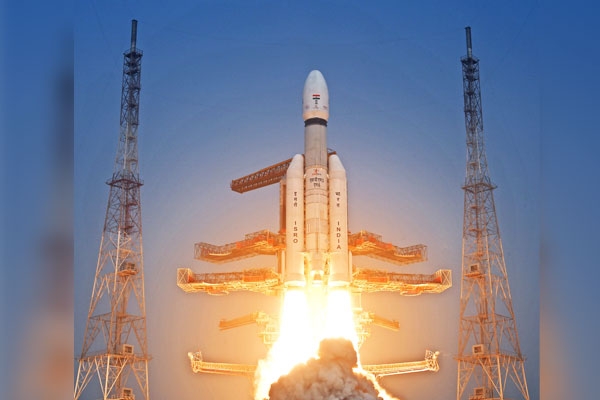
India’s space journey in 2025 showed a mix of achievements and challenges: it was a year marked by significant milestones and important changes, yet also marred by few launches, notable failures, and growing delays that postponed key missions to 2026. Isro ended 2025 with only five launches into orbit, indicating a substantial decline from its previous busy schedule. Two of these missions were deemed unsuccessful or only partly successful, such as the PSLV EOS09 mission, which was halted due to a problem in the third stage, and the NVS02 navigation satellite, which did not reach the correct orbit. However, the other three launches were important from both technical and political standpoints. Nisar, a major Earth observation project by Nasa and Isro, finally took off in July after delays, emerging as the most prominent scientific endeavor of the year with its ability to monitor land and ice using dual-band radar.
Subsequent LVM3 missions saw the launch of the CMS03 communication satellite for the Indian Navy and a commercial BlueBird Block2 payload for AST SpaceMobile based in the US, showcasing LVM3’s important role as India’s heavy-lift and commercial launcher despite the small number of launches. While launch statistics may have been disappointing, the human spaceflight aspect marked India’s most visible achievement. Indian Air Force Group Captain Shubhanshu Shukla served as a pilot on Axiom Mission4 to the International Space Station. He became the first Indian to travel to the ISS and only the second Indian to journey into space, on a mission focused on science that lasted about two weeks and involved Nasa, SpaceX, and Axiom Space. For Isro, Ax4 was not just about pride; it acted as a real-time practice run for operations, life-support systems, experiment setups, and crew training that will directly support the local Gaganyaan program. Experience gained from docking and close-proximity operations with partners helped bridge the gap between India's experience and that of established human spaceflight nations, even as India's own crewed launch vehicle remains on the ground.
In the background, 2025 saw steady but significant progress in Gaganyaan, India’s human spaceflight initiative, with developments in astronaut training, abort test planning, and system qualifications. However, public milestones for the program were delayed again: the uncrewed Gaganyaan test flight, which was planned for late 2025, and the next NavIC NVS03 mission were both pushed to 2026, extending the already lengthy timeline. This trend emphasizes a notable shift in Isro’s focus: the organization is dedicating resources to complicated, high-risk endeavors, such as human spaceflight, advanced climate research missions, and deep-space projects, which affects the number of routine launches and makes individual failures more apparent and politically sensitive.
While 2025 showed Isro's limits, it also highlighted a clear plan to let businesses take the lead. In June, HAL won a deal to build, sell, and launch Isro's Small Satellite Launch Vehicle (SSLV). Later that year, an agreement gave HAL the plans, manufacturing knowledge, and operating guide for the rocket. Government support grew in the 2025-26 budget with initiatives like the National Geospatial Mission, a fund for startups, more loan guarantees, more Atal Tinkering Labs, and a special DeepTech Fund. IN-SPACe's Technology Adoption Fund helped local production and manufacturing grow, and states created their own space policies, matching national goals.
At the same time, progress from startups like Skyroot Aerospace and Agnikul Cosmos showed that India's market for small launchers was becoming real. Skyroot moved its Vikram rockets closer to being ready by testing their engines, while Agnikul got its Agnibaan orbital vehicle ready and announced plans for rockets that could be reused, matching private company goals with worldwide trends. A major problem Isro still has is its poor communication with the public. Isro seems more comfortable working without much public interaction.
The NVS-02 mission shows a change in how the space agency operates. After engine problems were reported, the agency gave few details, unlike its usual open communication. A later government response confirmed that the satellite doesn't work, which hadn't been said publicly. The office of the Isro chairman has not responded to questions.
The space agency urgently needs to improve how it communicates, especially as it plans more missions that could inspire people in a country aiming for a space station by 2035 and an Indian on the Moon by 2040. In terms of launches, sticking to schedules, and mission success, 2025 was not a great year for Isro, and two failed launches will affect how it's judged. This is especially true when compared to China, which had 90 launches, and SpaceX, which led globally with 167 launches. However, regarding strategic changes, important achievements include India's first astronaut on the International Space Station, progress with the Gaganyaan system, the significant Nisar mission, and the transfer of SSLV technology to companies like HAL, Skyroot, and Agnikul. Isro also quietly helped "Operation Sindoor" by providing better real-time information with detailed Earth images, secure navigation through NavIC, and dependable satellite communication for coordinated activities.
This year might be seen as the time when India's space program changed from being run by just one organization to involving many different groups, preparing for a more challenging but exciting future.