(Image source from: Bloomberg.com)
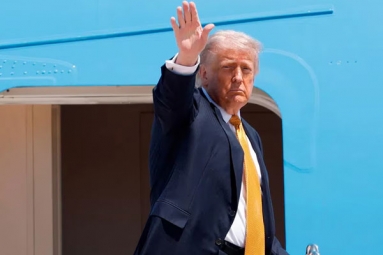
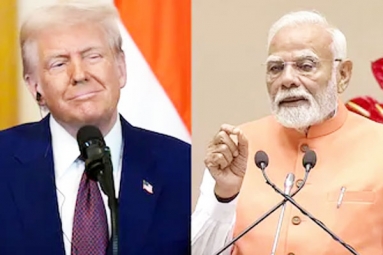
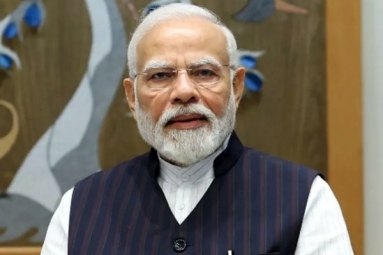
When Narendra Modi secured victory in the 2014 Lok Sabha elections, a newspaper in the UK referred to him as "India's first social media prime minister. " Twelve years later, PM Modi appears to have excelled in engaging with social media. This was evident on Tuesday when India and the EU revealed their trade agreement. PM Modi skillfully utilized this diplomatic achievement to connect with millions throughout Europe by sharing details of the agreement in 24 different languages spoken in the EU. Experts in international relations labeled it a "multilingual masterstroke" from PM Modi. With just one message, he effectively communicated with all 27 countries in the European Union. The trade agreement represented a personal connection for both India and the EU, rather than just a business deal, especially due to the challenges created by US President Donald Trump. Both India and the EU have been shaken by Trump’s aggressive trade strategies and high tariffs. India is already facing a 50% tariff and has been compelled to enter into an unfavorable trade agreement favoring the United States. Meanwhile, Europe has also confronted Trump's anger for opposing his attempt to take control of Greenland.
Indeed, utilizing tariffs as a tool for negotiating trade and punishing countries, even allies, has been a major tactic for Trump. The India-EU "mother of all deals," finalized on January 27 after two decades of negotiations, was characterized by mutual respect. This was evident in PM Modi's post on X once the agreement was made public. The Prime Minister emphasized his gratitude towards the leaders of all 27 EU nations. "The completion of the India-EU FTA today is a big step forward in our relationship. I appreciate all the leaders in Europe for their collaborative spirit and dedication to making this possible over the years. This agreement will enhance our economic connections, create new opportunities for our citizens, and strengthen the relationship between India and Europe for a bright future," PM Modi tweeted.
Yet, what happened next caught everyone off guard when the Prime Minister, as a unique gesture, shared it in all 24 official languages of the European Union through a tweet. The announcement was made in languages such as French, German, Greek, Italian, Bulgarian, Croatian, Czech, Danish, Dutch, Estonian, Finnish, Hungarian, Irish, Latvian, Lithuanian, Maltese, Polish, Portuguese, Romanian, Slovak, Slovenian, Spanish, and Swedish. Numerous leaders, including the President of Finland, responded to PM Modi's tweets by posting in Hindi about the trade agreement.
Dr Cristina Vanberghen, a political analyst and senior advisor at the European Commission, referred to it as a "graceful acknowledgment" to 27 nations simultaneously. "By using each nation's language, PM Modi changed a trade deal into a cultural connection. The free trade agreement felt personal rather than bureaucratic, human rather than merely a business transaction. This represents modern diplomacy at its finest - trade combined with respect," Vanberghen tweeted.
"And this is not something that can just happen randomly. It comes from culture, planning, and being genuine," she added. Marios Karatzias, a specialist in geopolitics, described it as "superb public diplomacy" at its peak. "In the digital age, leaders like Modi are using social media to talk directly to global audiences, skipping over traditional methods for real, meaningful exchanges. It’s a significant change that is both inspiring and effective," he tweeted. The free trade agreement will now go through a legal examination before it is officially signed, aiming to lower tariffs between India and the EU. For India, tariffs imposed by the EU will decrease to zero for goods that require a lot of labor. Union minister Piyush Goyal stated that the EU will eliminate all tariffs on more than 90% of Indian products. For European countries, tariffs on 96% of their goods exported to India will be removed or lessened. Notably, India has chosen to allow EU imports into its automobile market by cutting tariffs on most vehicles to between 30% and 35%. This will be gradually reduced to 10% over the years. The deal has taken years to develop and represents a beneficial situation for both India and the EU amid current geopolitical challenges. This is what made PM Modi's focused diplomacy particularly remarkable.