(Image source from: BCCI Twitter)
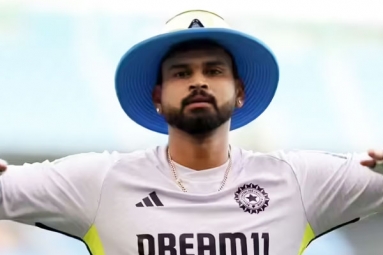
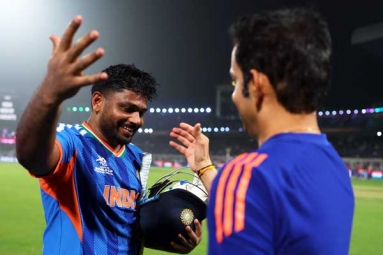
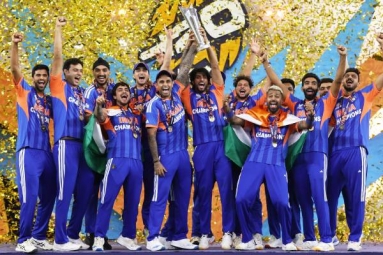
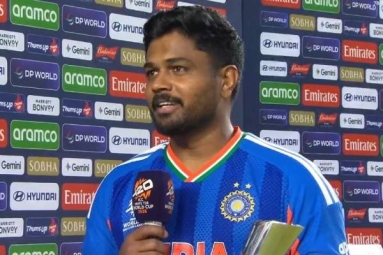
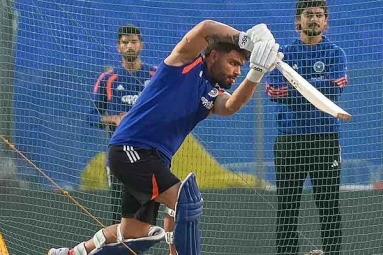
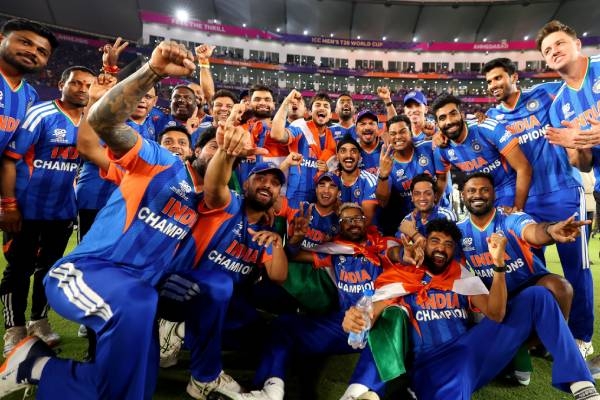
It was a vast blue scene at the Narendra Modi Stadium, and the unfortunate team of nearly-winners in world cricket faced a tough loss, as India - the home team and favorites before the tournament - claimed their third T20 World Cup title and second in a row by dominating New Zealand with a 96-run win. Just like in their thrilling semi-final match against England, India was asked to bat first and they met the challenge head-on with an intense display of powerful hitting. Abhishek Sharma and Ishan Kishan both achieved strike rates exceeding 200 with their contrasting half-centuries, but it was Sanju Samson who took the spotlight once more. He continued his impressive run by scoring 89 again, bringing his total to 275 runs in 138 balls since finding his form during India’s crucial win over the West Indies.
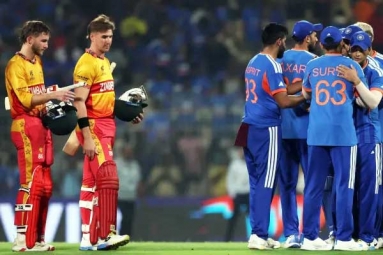
By the time they had amassed a huge score of 255 for 5 - two runs better than their previous record at Wankhede - New Zealand needed an even more spectacular performance than they had shown in their semi-final against South Africa, where Finn Allen had achieved a tournament-record hundred in just 33 balls. Instead, they faced Jasprit Bumrah, who delivered outstanding figures of 4 wickets for just 15 runs in four overs - each wicket taken with his remarkable dipping offcutter that every player anticipates but has yet to counter effectively. Tilak Varma helped seal the win with a well-timed catch at long-on off the relatively rare spin of Abhishek, as India made history by becoming the first team to hold onto their title in T20 World Cup history, and gave Ahmedabad a home victory that had previously slipped away against Australia in the 2023 50-over World Cup.
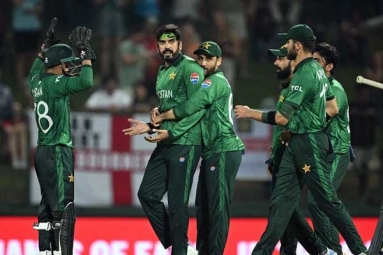
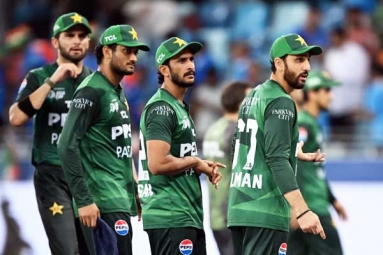
For New Zealand, it was a repeat of their past struggles in finals. This was their fifth final in ICC events since they broke their semi-final streak in 2015, but this marked their most significant defeat. New Zealand's strategy was to be unpredictable, aiming to sneak in easy overs by constantly changing bowlers and hoping India's batters wouldn’t adapt quickly enough before facing the next one. For two full overs, this tactic was successful. Matt Henry aimed for four straight dot balls against Sanju Samson, who then hit a shorter ball over long-on, seemingly to prove the strategy wrong. With Cole McConchie absent, whose sole over had devastated South Africa in their semi-final, Glenn Phillips stepped in with his offspin, managing three singles and a two during the first powerplay over of his T20I career.
However, just as quickly as the strategy was put into action, it fell apart. Jacob Duffy bowled the third over but lost his aim after being called for a close wide ball, and Abhishek took advantage by hitting two fours in consecutive balls. Lockie Ferguson bowled the next over but was hit for 24 runs, with Abhishek sending the ball flying over the covers for six, followed by Samson who hit a leading edge over the deep third area. Neither shot was well-timed, but both comfortably reached the boundary, highlighting the nature of the mixed-soil pitch. Henry came back to bowl the fifth over, but by this point, India was in full flow. They had given away a series of slower balls and wides - four in six balls, totaling eight wides in the powerplay, which was their highest in a T20I - showing that New Zealand was already attempting to avoid pitching where it could be hit. But after the difficult tournament he had faced, Abhishek wasn’t interested in playing around.
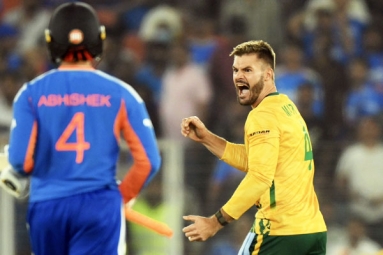
By the finish of Duffy's second over, Abhishek had managed to score a fifty off just 18 balls, making it the quickest in a T20 World Cup knockout match. As usual for the tournament, Abhishek hadn’t found the sweet spot of his bat yet, even though he hit 20 runs in five balls, including a top-edged swing that narrowly missed Mark Chapman before rolling away for four. However, the number of runs he scored was much more important than how he did it. Under his watch, India had accumulated 92 runs without losing a wicket during the powerplay, with 80 of those runs coming from just the last four overs. Abhishek’s enjoyable innings came to an end soon after when he edged a wide ball from Rachin Ravindra’s first delivery. In their next eight overs, they scored another 105 runs - technically at a slower pace than before, but the quality of the shots was outstanding.
Samson didn’t need to push hard to reach his fifty in 33 balls. But then he celebrated with two crushing sixes off the unfortunate Ferguson, who ended up with figures of 2-0-48-0, and did not return to bowl again. With his batting now in great form, Ravindra hit three consecutive sixes, including one of the most powerful inside-out drives imaginable, taking India to a score of 191 for 1 after 14 overs during the drinks break. At the other end, Kishan was in perfect timing, starting right from his first-ball drive to long-on. Mitchell Santner had kept his teammates relatively calm by giving away just 13 runs in his first 14 balls, but Kishan smashed him deep into the midwicket stands with a beautiful slog-sweep, then repeated that in Santner’s last over on his way to a fifty off 23 balls.
For the initial 15 overs, the people in the crowd catching balls had a better time than New Zealand's players on the field, with at least two impressive catches made by fans. Everything shifted during Jimmy Neesham's second over, which started with the possibility of reaching a score of 300, but ended with the crowd shocked into silence as three wickets fell for just one run in six balls. His opening delivery to Samson was a high full-toss, and even though McConchie wasn't part of the playing XI, he still managed to shine in this final with a confident catch at the long-on boundary.
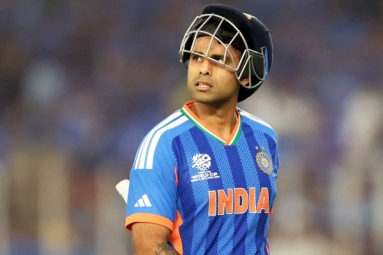
After four balls and one single, India's other batsman was dismissed – this time due to a low full-toss. Kishan swung hard but missed cleanly, allowing Chapman at long-on to easily complete the catch. Suryakumar Yadav, on the other hand, needed a more remarkable effort to get him out. His first ball, a pick-up shot over backward square, looked perfectly timed, but Ravindra ran around the boundary to make an incredible diving catch. Shockingly, New Zealand could have and should have taken four wickets for just two runs in eight balls, but Tilak's first shot off Duffy went right through Allen's hands at backward point. This drop didn't end up being too costly, as Tilak couldn't hit any boundaries in his eight-ball stay, but it reflected a fielding performance that was not as strong as those few great moments suggested it could have been.
Following a limit on India's score to 28 runs from 24 balls in overs 15-19, Shivam Dube stepped up to deliver a final blow by hammering Neesham's last over for 24 runs, including two sixes and three fours. The first boundary was aided by Santner fumbling a full-length catch at long-off. He would have made an amazing catch if he had successfully reached for it, but those were the expected standards given his team’s situation. In the opening over of the chase, Arshdeep Singh could have taken a crucial wicket of Allen, but Dube dropped a difficult catch at mid-off. In the second over, Tim Seifert hit Hardik Pandya for two sixes and two fours, taking away the confident atmosphere of the now anxious home crowd. Bumrah was held back for the third over for good reasons, as Axar Patel - chosen over Varun Chakravarthy - restricted Allen's space from around the wicket, leading to a shot that went to long-on for 9 runs off 7 balls. And that … was the turning point. At a score of 32 for 1 after three overs, with Ravindra new to bat and facing, Bumrah entered the scene with his expected magic touch.
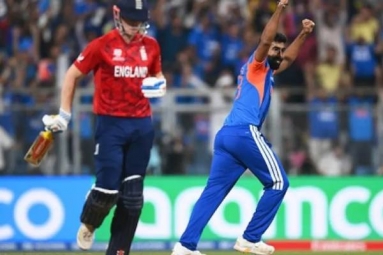
Just like Harry Brook in the semi-final, and earlier with Ryan Rickelton and Roston Chase, Ravindra probably anticipated the first-ball offcutter, yet he couldn’t resist reaching for the delivery that seemed too high. He was too early with his shot, and it took a fantastic catch from Kishan at deep backward square to complete the play, almost dropping the ball. With the brakes firmly applied in a four-run over, things might have ended there. However, Axar revealed Phillips' ongoing weakness by bowling him out for the fifth time in a row, so Bumrah returned for a rare double powerplay run. After giving up five more hard-earned runs, New Zealand found themselves at 52 for 3, with their chase already failing.
Seifert did his best to keep the game alive with a quick fifty off 23 balls, but Chakravarthy dismissed him with a loose delivery, solidifying his role as the top wicket-taker of the tournament. By that point, Chapman had fallen to Hardik for just 3 runs. The last bit of resistance came from captain Santner, who scored 43, and Daryl Mitchell, who stood his ground after getting hit by a wild throw from an unrepentant Arshdeep, but soon became Axar's (and Kishan's) third out. The real danger had already left the game a long time ago.